Thursday, April 17

Sooo...do YOU like GIVEAWAYS?!

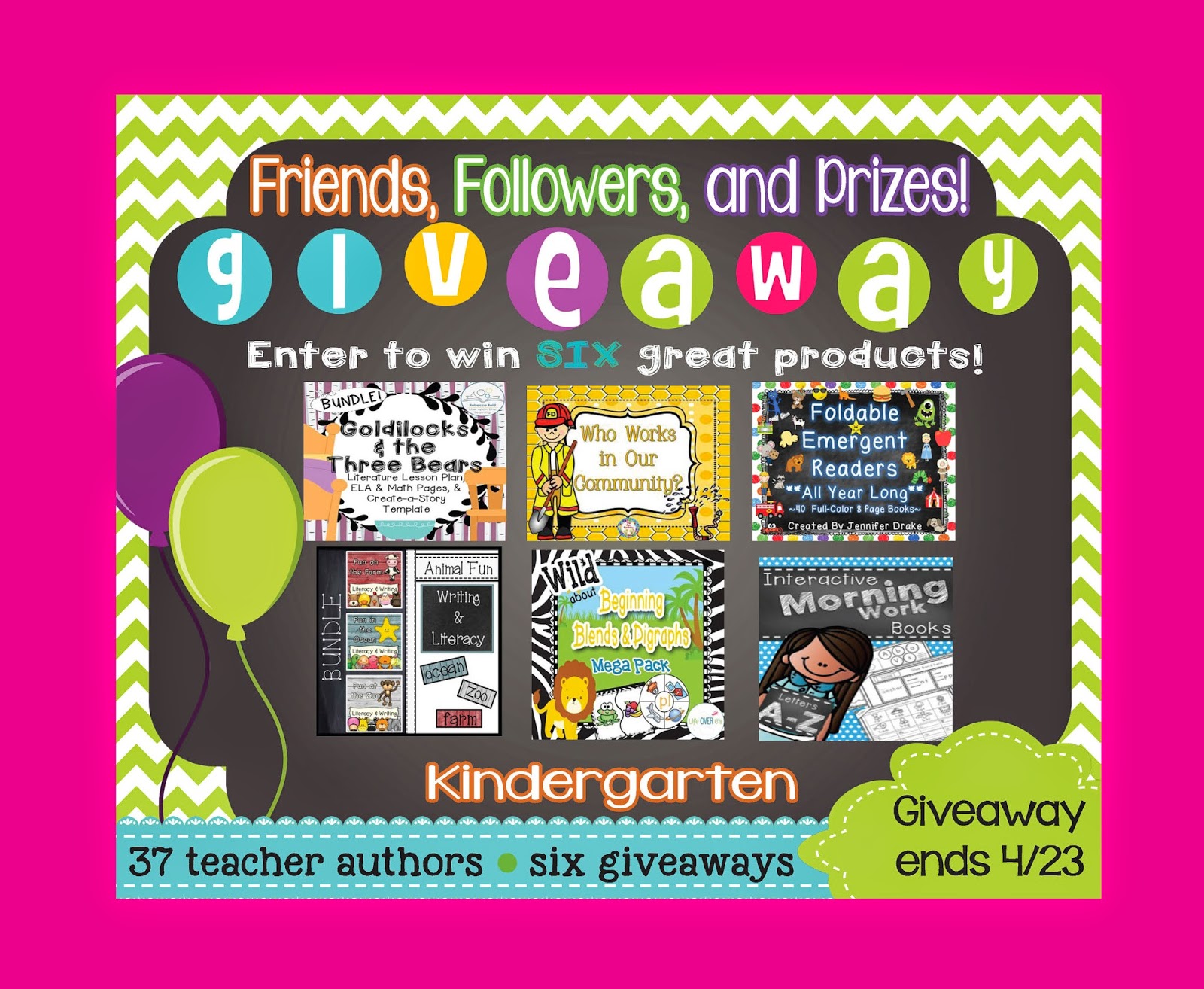
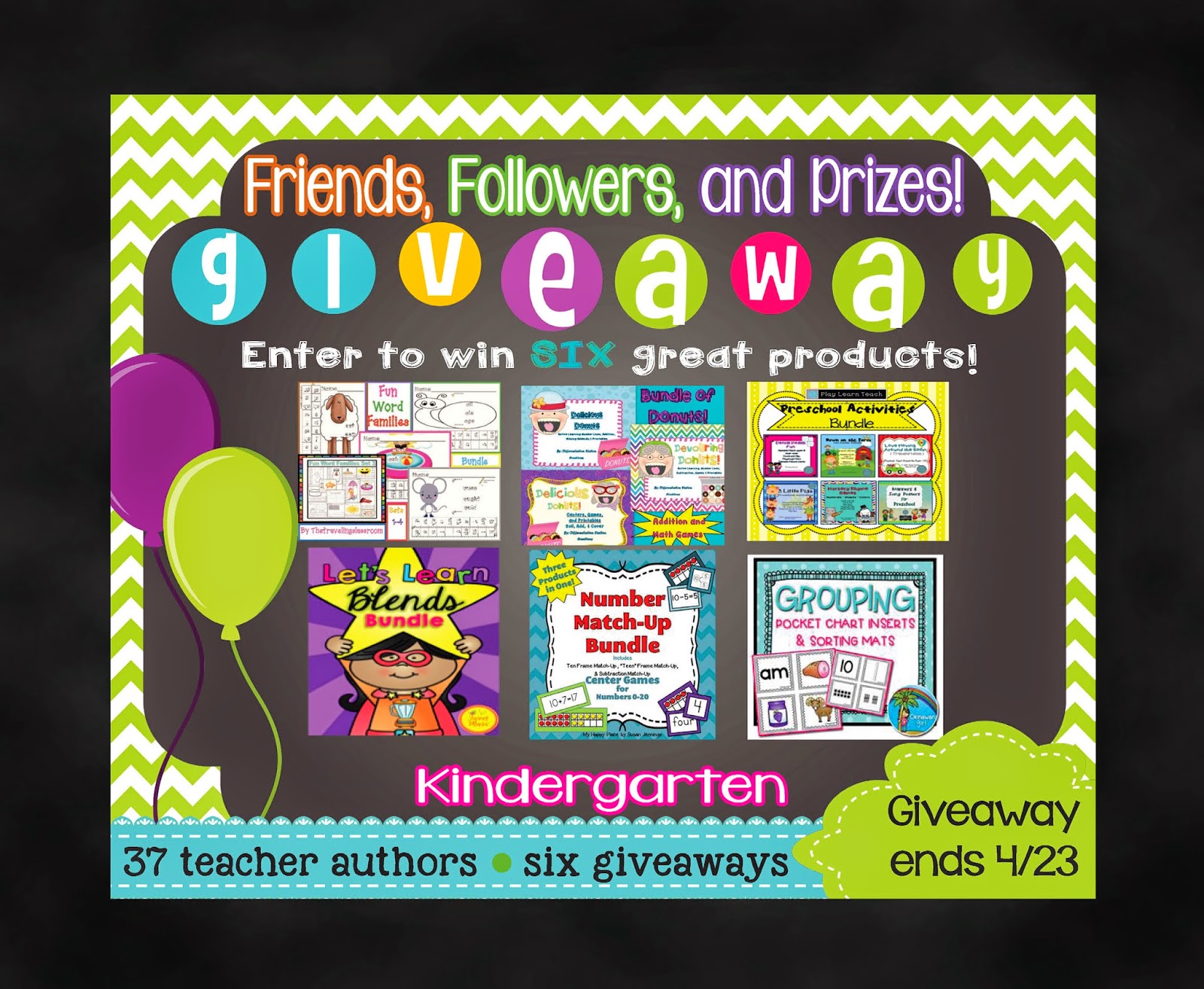
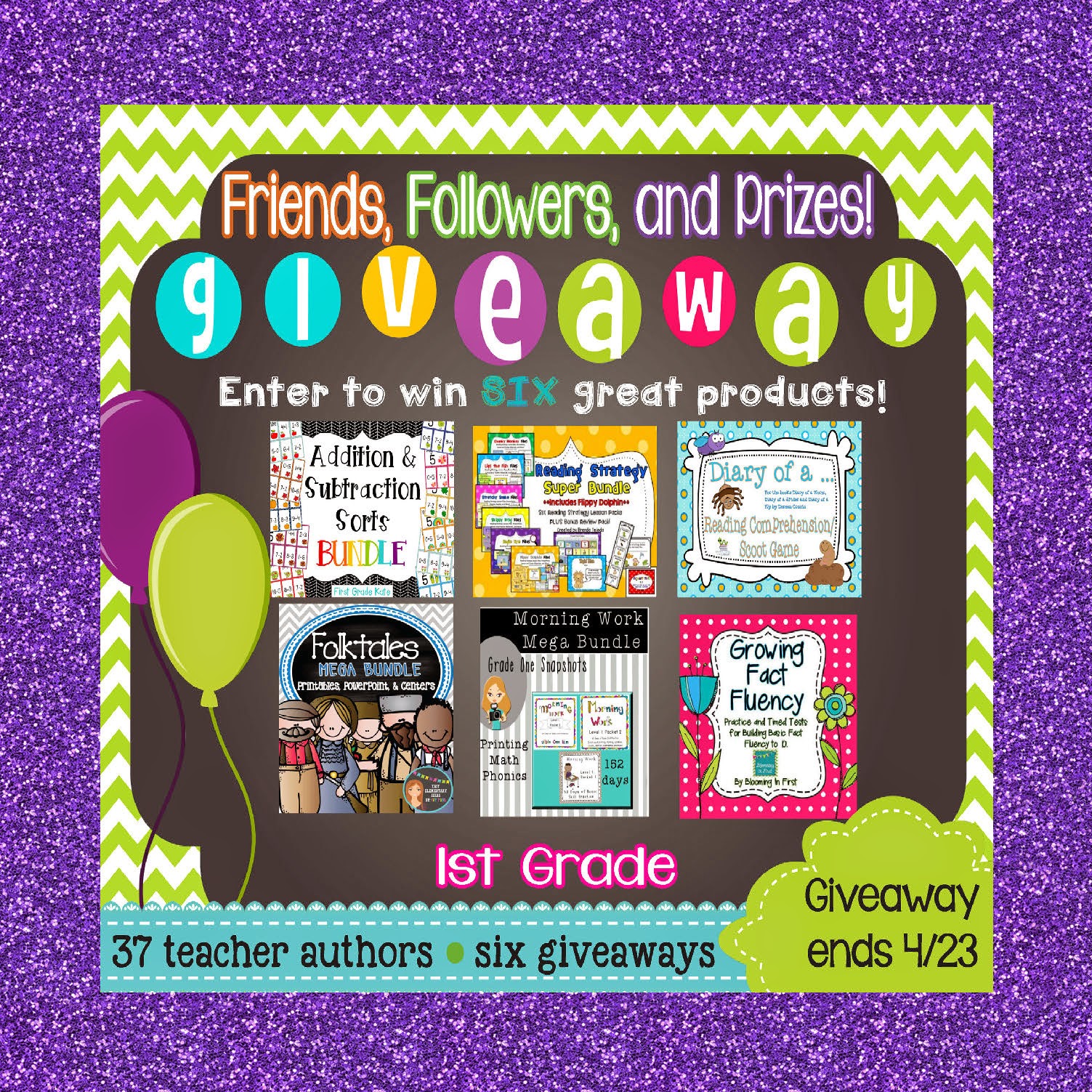
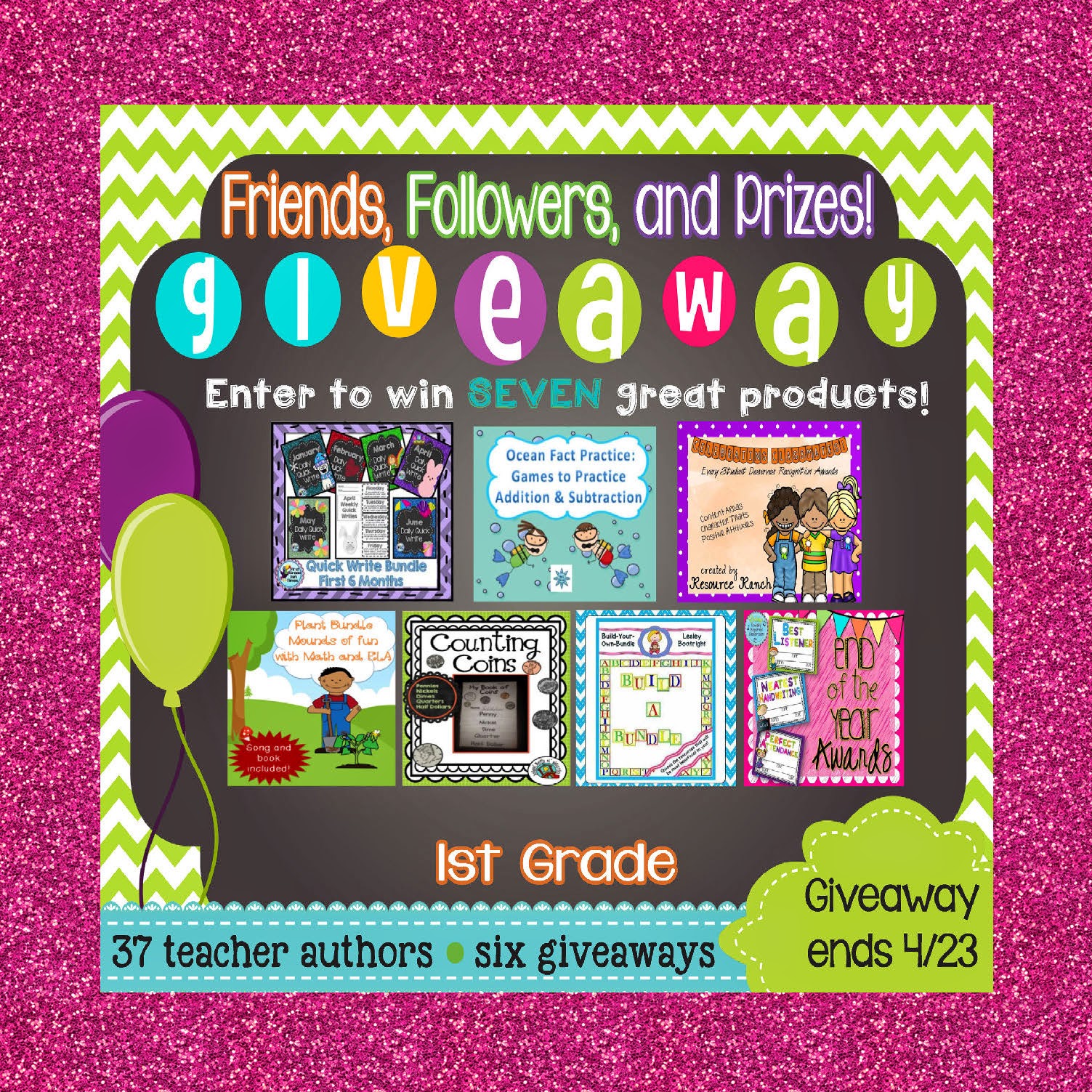
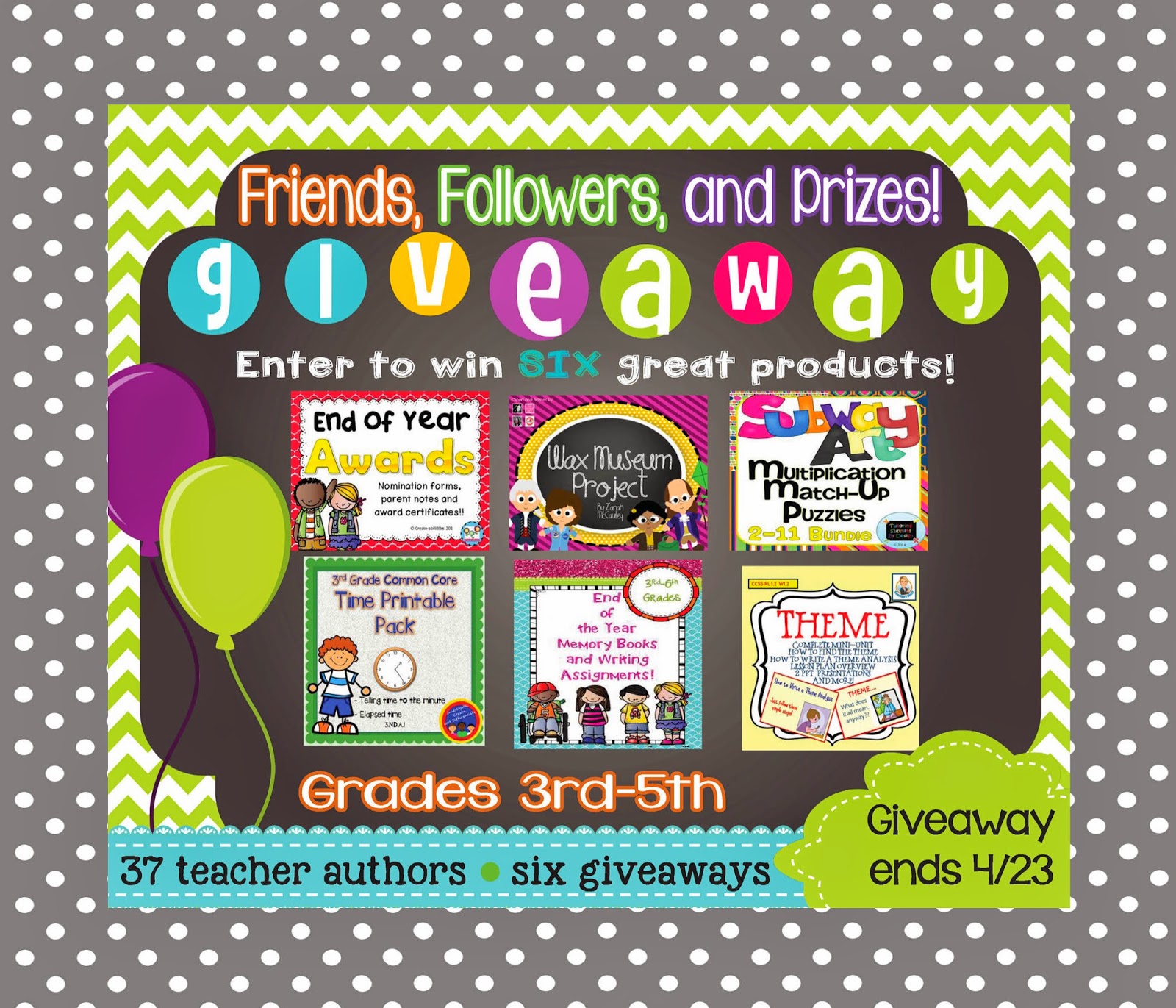
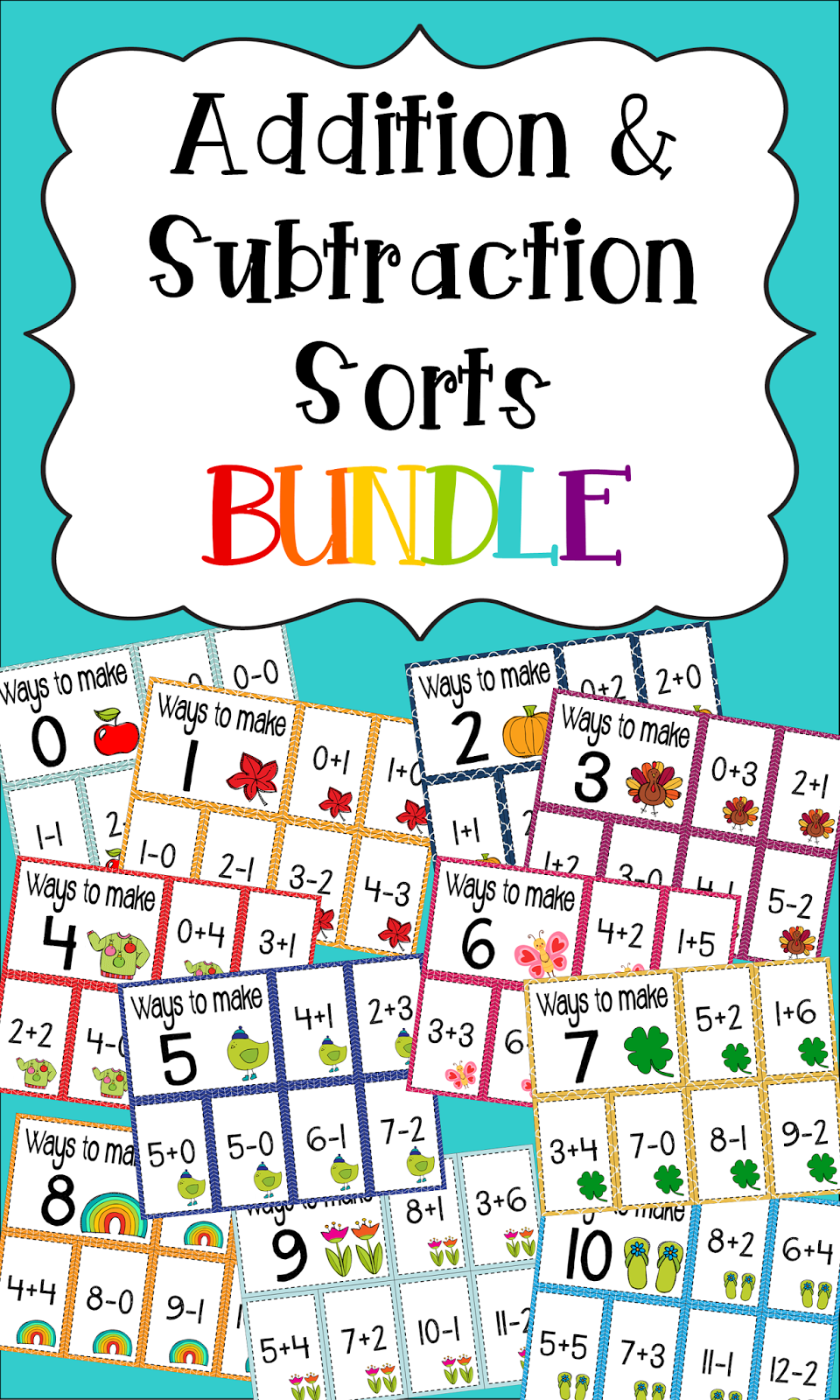
Oh yes, you read that right...GIVEAWAYS, as in more than one.  I've teamed up with 36 other teacher bloggers to offer some of our best-selling bundles in SIX huge giveaways!  I've included my Addition & Subtraction Sorts Bundle, which has been a favorite of my class for practicing our fact fluency!

http://www.teacherspayteachers.com/Product/Addition-Subtraction-Fluency-Sorts-BUNDLE-1055813


The giveaways are split up by grade level.  There are two Kindergarten giveaways, two 1st grade giveaways, one 2nd grade giveaway, and one 3rd-5th giveaway.  A little something for everyone! :)

Since I am not cool enough to have a Facebook page (yet!), I am posting about it here.  However, to enter, you will need to visit the Facebook pages of our lovely giveaway hosts.  Just click the images below to be taken to the Rafflecopter giveaways.


Kindergarten:

http://tinyurl.com/ky59wbu

http://tinyurl.com/ky59wbu


1st grade:

http://tinyurl.com/krpag73

http://tinyurl.com/ky59wbu 


2nd grade:

http://tinyurl.com/l8v4ysv


3rd-5th grade:

http://tinyurl.com/o6ueago


Pretty awesome, right?!  I would LOVE for a "First Grade Kate" follower to win, so make sure you head on over and enter before April 23rd!!


Saturday, March 22

It's the Doubles, Baby!

We are smack dab in the middle of our addition and subtraction unit, and I have to say it is one of my very favorite things to teach!  I love teaching kids all of the strategies and watching kids make the connections between different numbers and problems.  A couple weeks ago, we were learning about doubles facts, and I remembered a little FREE craft from Morgan Berard that I found on TPT awhile back.  Kids create a "doubles iPod" to remember their doubles facts, complete with a little rap and a place to store doubles flash cards.  How fabulously fun is that?!

http://www.teacherspayteachers.com/Product/The-Doubles-Rap-Ipod-Template--164833

I adapted the iPod a little bit to make it fit my needs- using construction paper instead of an envelope.  First, I folded 11x18" construction paper to make the pocket for the flashcards.


Next, I cut the paper into sections.  I wanted the iPods a little wider, so I only made 3 out of each piece of paper.  You could cut each piece to make 4 iPods if you wanted.


Then, I stapled the sides of each iPod to make the pockets.  I pre-made iPods in several different colors beforehand to save time and my sanity.


I had the kids make doubles flash cards and glue on the rap and the iPod "buttons".  Their flash cards fit perfectly into the little pocket.  (The cards below aren't tucked in all the way.)


Of course, we couldn't make an iPod without having some music to go with it.  I searched online for videos to match the rap that's on the iPod, and I found a couple cute ones.

This one is a class of kiddos performing the rap.  It's a little slower version, so we listened to it first while the kids were learning the rap.


This one has some 2nd grade teachers performing the rap.  My kids went NUTS over this!!  Not only were they singing it the rest of the day, but they still request to listen to it as a brain break!


My kids had an absolute blast with this, and it made learning their doubles facts a lot of fun!  They were so excited to take their iPods home and practice.  I hope this gives you another tool to add to your "teaching doubles" toolbox!

Happy Teaching!


Monday, February 17

Quick Ways to Use A Number Line {Freebie!}

I'm not sure if I've mentioned this before, but I am a math tutor for our after school program.  I work with kids in K-5 who have been identified through test scores and teacher recommendations as needing additional support in math.  The other day I was working with a Kindergarten cutie when I had the idea to put one of my student sized number lines in a plastic sleeve.  Maybe I'm the last one to think of this, maybe not, but I was able to do a lot of things with it.  (Bonus: the student got to use a dry erase marker, which made it extra cool.) :)


I started off with just having her find and circle a few different numbers.  Since I only see each group twice a week and the cutie I was working with is frequently absent, I wanted to get a current baseline on her number ID skills.


Then I started drawing lines or circles for her to count.  She had to practice using one to one correspondence and then circle the correct number on the number line.


You could also have students write each number as they count for extra practice and reinforcement.


Once kids have the basics down, you could take it up a notch by asking them to find 1 more/less than a number.  A number line is a great visual for this.


While I was working with this Kindergarten student, I also had the idea to use this with my first graders who were struggling with missing addends.  I thought the visual would help as they learn to count up and solve those trickier problems.

Need number lines for your classroom?  You can grab these free number lines here, or (if you wanna spice things up a bit), grab my seasonally themed 120 Charts and Number Lines here.  They add a festive little flair to your math block, and students love when a new theme is revealed! :)

Happy Teaching!


Monday, January 27

Self Reflection Sheet for Conferences (Freebie!)

My team and I are trying something new for Parent Teacher Conferences.  The elementary schools in our district are set up differently in that each person on a grade level team "specializes" in one subject area and teaches it to all the classes in that grade level.  I specialize in math, so I teach math to all three first grade classes in my building.  I love getting to know all of the kids, but it's hard around Parent Teacher Conferences because I can't connect with every parent about their child's math progress.

Enter...Student Led Conferences!  We are trying it this way for February conferences because we hope it'll give kids an opportunity to take some more ownership of their learning.  It will also allow us to meet with more parents than the traditional conference format.

To prepare for Student Led Conferences ("SLCs" if you wanna shorten things up), we are having our kids complete a self-reflection sheet.  They will share this with their parents at conferences and do some goal setting for the 3rd trimester.  If you want a copy of the reflection sheet, click here or on the pictures below!

https://drive.google.com/file/d/0B3Py7cWfEmguU0NVXzlINWtwS1E/edit?usp=sharing

https://drive.google.com/file/d/0B3Py7cWfEmguU0NVXzlINWtwS1E/edit?usp=sharing


Sunday, January 12

A makeover, a bundle, & a SALE!

I have been meaning to give a little facelift to some of my older TPT items, and I've decided to make that my project for the next few weeks.  Yesterday, I updated my More or Less pack, which has math centers for 1 more, 1 less and 10 more, 10 less.

http://www.teacherspayteachers.com/Product/Number-Sense-MoreLess-Games-787851


I also bundled my Addition & Subtraction Sorts, which are great for practicing fact fluency!

http://www.teacherspayteachers.com/Product/Addition-Subtraction-Sorts-BUNDLE-1055813


What I love about both of these items are that they include centers for every month of the school year, so you don't have to worry about it being the right time of year to bring them out!  To celebrate FINALLY getting around to doing some product plastic surgery, I'm putting both of these items on sale for 20% until Tuesday night!

Sunday, January 5

Hands-On Fractions {Using Playdough to Show Equal Shares}

We just completed the bulk of our fractions unit before break, although we'll still be doing some fractions review in the coming weeks!  I've found that many kids have the misconception that one fourth is bigger than one half, because four is bigger than two.  The 1st grade Common Core addresses this with 1.G.A.3, which says students will understand that "decomposing into more equal shares creates smaller shares".  To try and model this concept, I did some illustrations on the board, and I gave many food examples about sharing brownies, cookies, etc.  Some of my kids "got it" through that modeling, but I still had many who didn't understand.  They knew that the object got more parts, but they couldn't tell me what happened to the SIZE of each part.

One day, I was struggling to explain this concept when I spied a can of Playdough on my desk.  (Because everyone has one of those on their desk right?  No...just me?) ;)  Even if you aren't weird like me and don't keep a can of Playdough on your desk, if you've been in a primary classroom, you know that Playdough is quite a hot commodity.  In fact, I'm sure you've broken up many arguments involving "so and so getting more playdough". 

I started by pretending that I was the only one who wanted to play with the playdough, which meant that I would get the whole thing.  I had them tell me that it was "one whole".


Next, I pretended that someone else came along and asked to play, which meant that I would have to share.  At first, I broke just a small part of the playdough off to give to the other person, and the kids erupted saying, "No!  No!  That's not fair!"  I had them explain this to me further using the words "equal" and "unequal".


After the kids told me that my friend and I should split the Playdough equally, I had someone come up and split the Playdough into two equal groups.  We then reviewed how two equal parts were called "halves" and figured out that if I got to play with one of the parts that my share was "1/2".


Then, I pretended that 2 more people wanted to share our Playdough, and now we needed to split it into four equal parts.  We repeated the same procedure that we did with halves.  I kept pretending that more and more kids wanted to play with our Playdough, until we had split the playdough up into 16 equal parts.  Since only halves and fourths are in the 1st grade Common Core, I mostly focused on identifying and labeling the examples that showed two and four equal parts.  I did ask about eighths since I've been talking about other fractions with some of my higher kiddos, but I told them it was a "challenge question". :)


By the time I got to sixteenths, the kids were freaking out about how little Playdough each person got.  It was a great real-world example for them and really drove the point home that if you have to split something into more parts, each part (ie: how much THEY would get) would be smaller.  I encourage you to try this experiment with your class and see what kinds of connections they make with it!  If you do try this, I'd love to know the results!  Just leave a comment below or email me at firstgradekate@gmail.com. 

If you're a visual person like me and want to view this whole experiment in one fell swoop, feel free to pin the image below onto your Pinterest boards!


Happy Teaching!

Wednesday, January 1

Happy New Year!!

I hope your year is filled with joy, peace, and wonderful moments with your loved ones!

I am putting everything in my TPT store on sale for 20% off today and tomorrow!

http://www.teacherspayteachers.com/Store/First-Grade-Kate


Happy 2014!!
Related Posts Plugin for WordPress, Blogger...